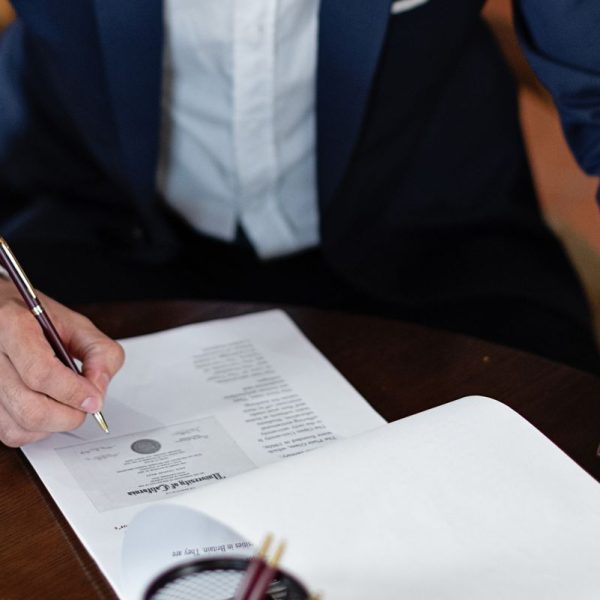
A mid sized law firm preparing evidence for an international arbitration case discovered too late that a translated contract clause carried a subtly different legal meaning than the original Arabic source document.
Why Legal Translation Cannot Tolerate Approximation
Contracts pleadings and evidentiary documents rely on exact legal terminology. A single mistranslated clause can shift liability change a deadline or undermine an argument in front of a judge or arbitration panel.
Firms that treat legal translation as a routine task often discover the real cost only after opposing counsel challenges a document or a court questions whether the translation accurately reflects the source text.
Choosing A Partner With Genuine Legal Expertise
Law firms and corporate legal departments increasingly rely on a dedicated translation agency staffed with linguists who understand legal terminology across multiple jurisdictions rather than a generalist vendor.
A generic provider without legal training can produce text that reads smoothly yet still misses the precise terminology a court or regulator expects. That gap becomes serious the moment a document is actually relied upon.
Serving Russian Speaking Clients With Certified Precision
Firms handling cross border disputes involving Russian speaking parties increasingly need documentation that meets both linguistic and procedural standards before it can be submitted to a court or notary.
Procedural standards are where the vocabulary gets specific. PoliLingua’s service list distinguishes sworn translation from ordinary certified work and for a court filing that distinction is usually the one that decides admissibility. A notary or a judge is not assessing fluency but whether the person who signed the attestation was entitled to sign it. Establishing which of the two a given tribunal requires belongs at the start of a matter rather than in the week of the deadline.
Firms serious about this requirement increasingly commission certified russian translation services for contracts affidavits and evidentiary material rather than relying on an uncertified generalist.
What Separates A Dependable Partner From A Risky One
A dependable legal translation partner assigns linguists with real courtroom or contract experience and runs a second qualified review before any document is filed or submitted.
A risky partner treats a sworn affidavit the same way it treats a marketing brochure. This shortcut may work for casual content but consistently fails when legal accuracy and admissibility are genuinely at stake.
Building A Vetting Process That Protects Every Case
Firms evaluating a new language partner should request a sample translation reviewed by an independent attorney rather than accepting a polished portfolio that reveals little about actual legal competence.
Asking how a provider maintains terminology consistency across a long relationship also reveals whether they build proper legal glossaries or simply start fresh with every new matter that arrives.
The Hidden Cost Of Choosing The Wrong Provider
A poorly translated legal document rarely fails during the handoff itself. The problem surfaces later when a court or counterparty flags a discrepancy nobody caught during the original review.
Correcting this kind of error after filing costs far more than the original translation fee ever would have. Some errors cascade into delayed proceedings or a weakened position in negotiation.
Questions Worth Asking Before Choosing A Provider
A handful of direct questions reveal more than a polished sales pitch ever could. Has the translator handled documentation in this specific practice area before. Is an independent legal reviewer included before final delivery.
Providers who answer these questions with concrete detail almost always have a proven process behind them rather than simply promising quality without explaining exactly how that quality gets delivered every time.
Firms rarely discover a weak language partner during a quiet week; they discover it the morning a filing is due. That is why so many practices retain a provider for legal translation services before the first cross-border matter lands rather than after it has gone wrong. A relationship built in advance always costs less than an emergency one.
Firms handling cross-border matters need a supplier who can cover the hearing as well as the file. Choosing an agency that also provides interpretation services avoids the awkward moment when a client asks for a deposition and the answer is a referral elsewhere. Continuity of terminology across both is worth more than it sounds.
Law firms buying translation are usually buying against a worst case rather than a typical one. The extreme version of that requirement sits in international negotiation, where a single ambiguous rendering can be quoted for years afterwards. The standard expected of a diplomatic interpreter is the benchmark most legal buyers are implicitly reaching for.
Preparing Documents Before A Filing Deadline
Firms that gather every source document well ahead of a filing deadline give their language partner enough time to produce accurate work instead of rushing under unnecessary last minute pressure.
A short planning call at the start of a matter often uncovers additional requirements that would otherwise surface too late for the team to address without risking the entire filing timeline.
Measuring Quality Over Time Rather Than Once
Firms that judge a language partner purely on a first matter often miss patterns that only become visible once errors and delivery times get tracked systematically across many cases and several years of collaboration.
Reviewing this data on a regular schedule helps a firm catch a provider whose quality has started slipping before an important filing reaches a court without the scrutiny it deserved.
Training Internal Staff To Support Cleaner Filings
Paralegals who understand basic translation principles produce source documents that convert far more cleanly into another language from the first draft. Avoiding ambiguous phrasing saves translators considerable back and forth during review.
Firms that run a short internal session on writing translation friendly documents often notice faster turnaround times and fewer clarification requests throughout the entire process from drafting to final filing.
Coordinating Multiple Jurisdictions Within One Matter
Firms handling disputes across several jurisdictions at once often work with multiple translators simultaneously and this creates real coordination challenges when terminology needs to stay consistent across every filing.
A shared terminology base accessible to every translator involved prevents the confusion that arises when two different reviewers translate the same legal term two different ways across related case documents.